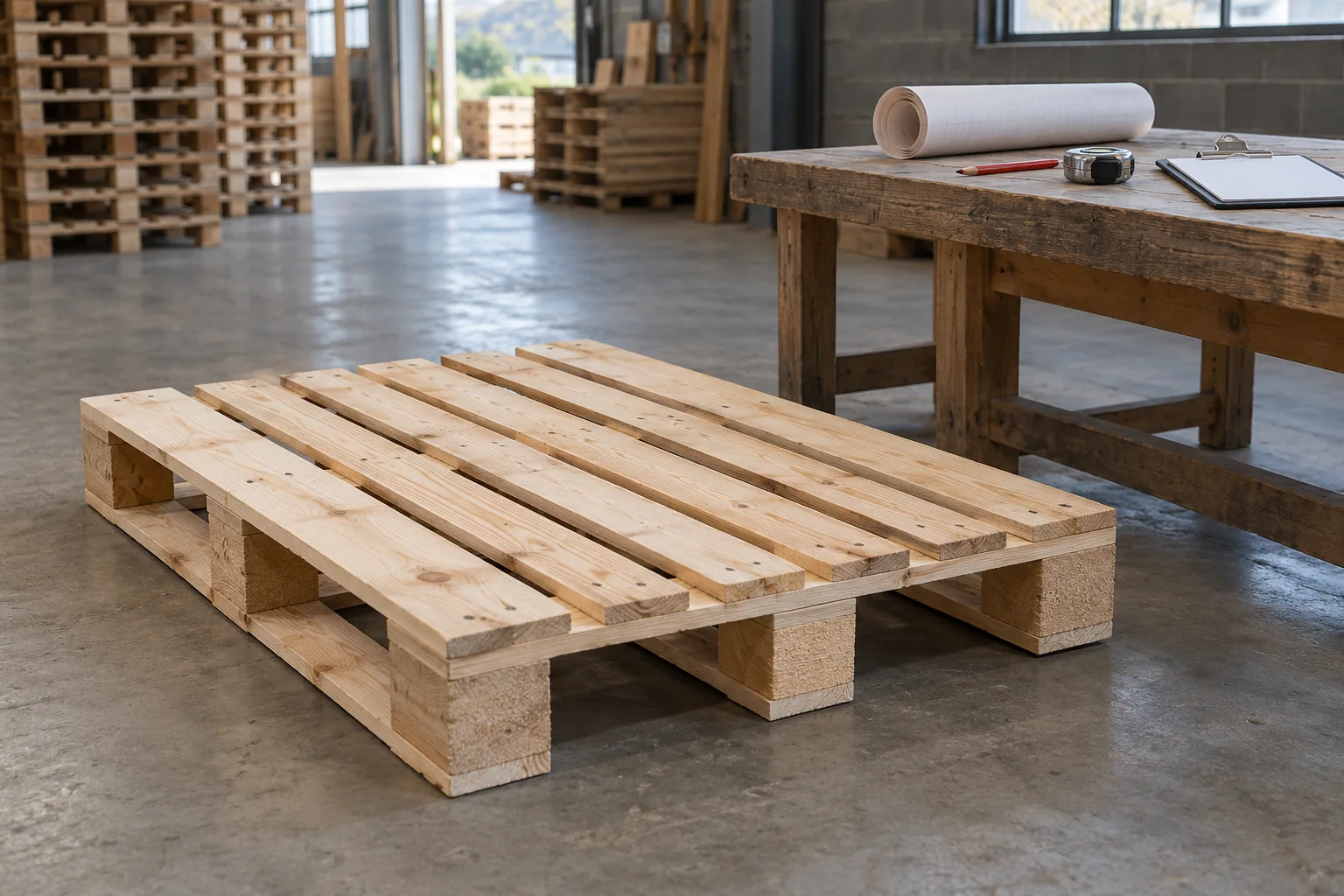
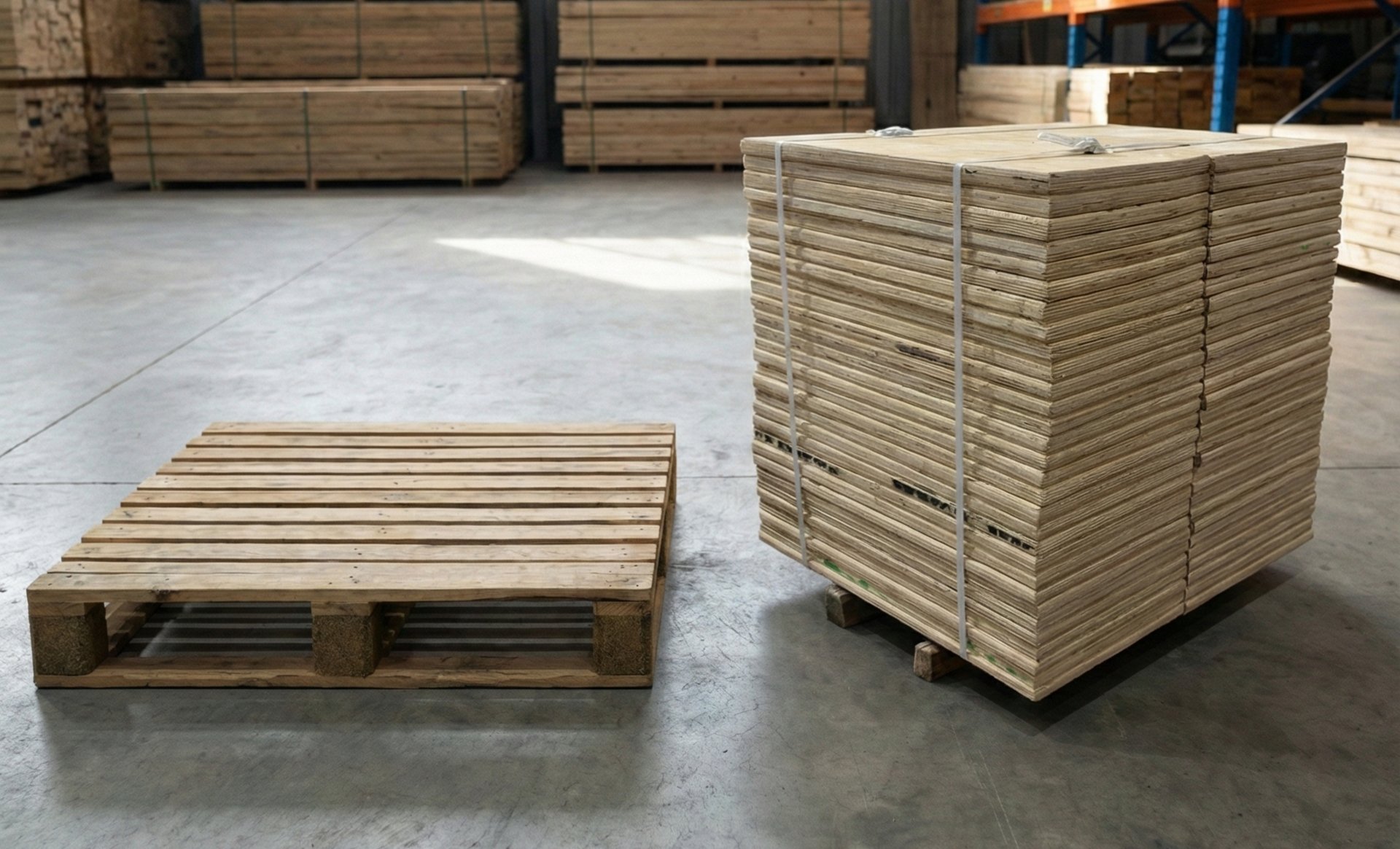
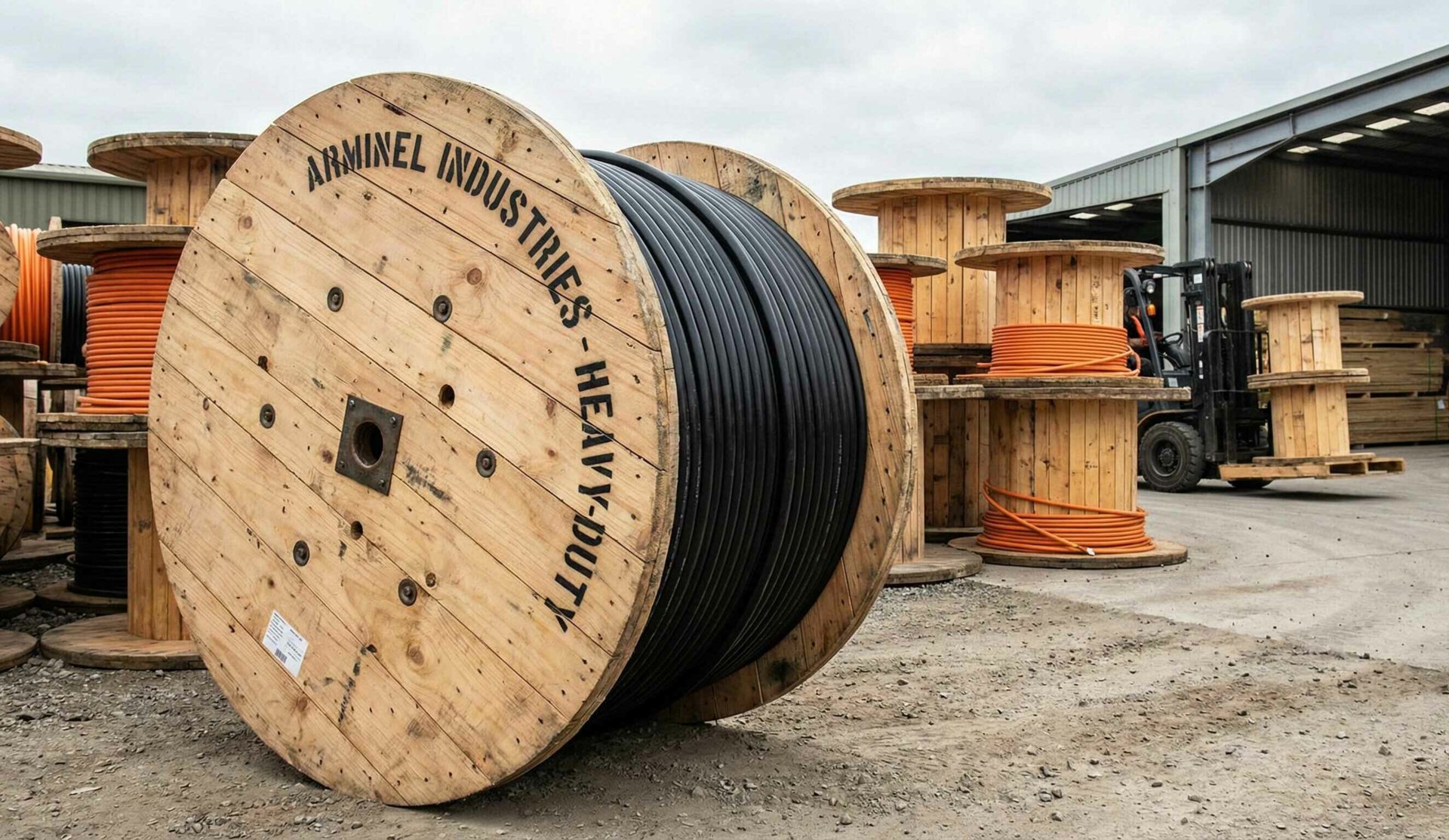
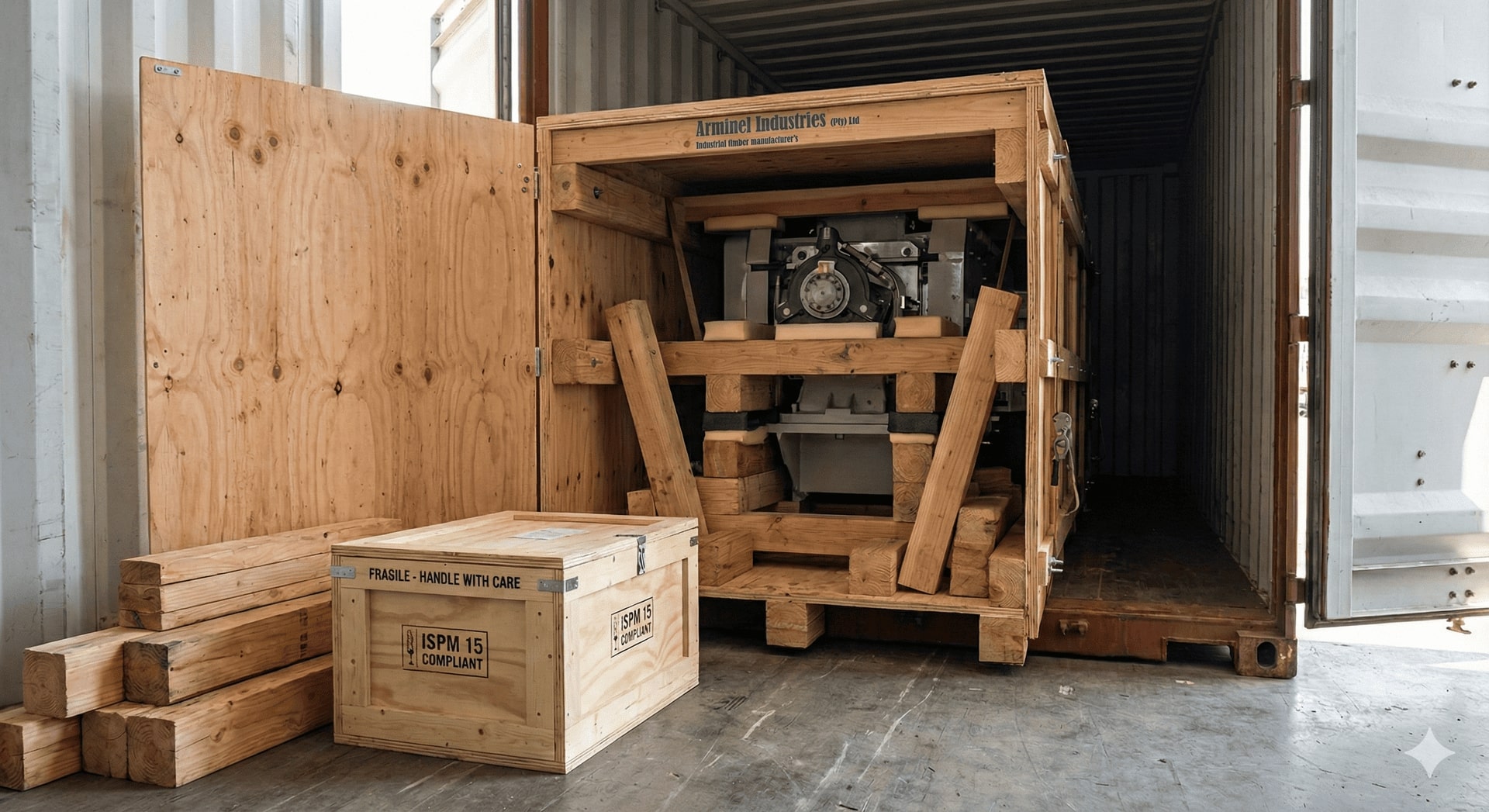
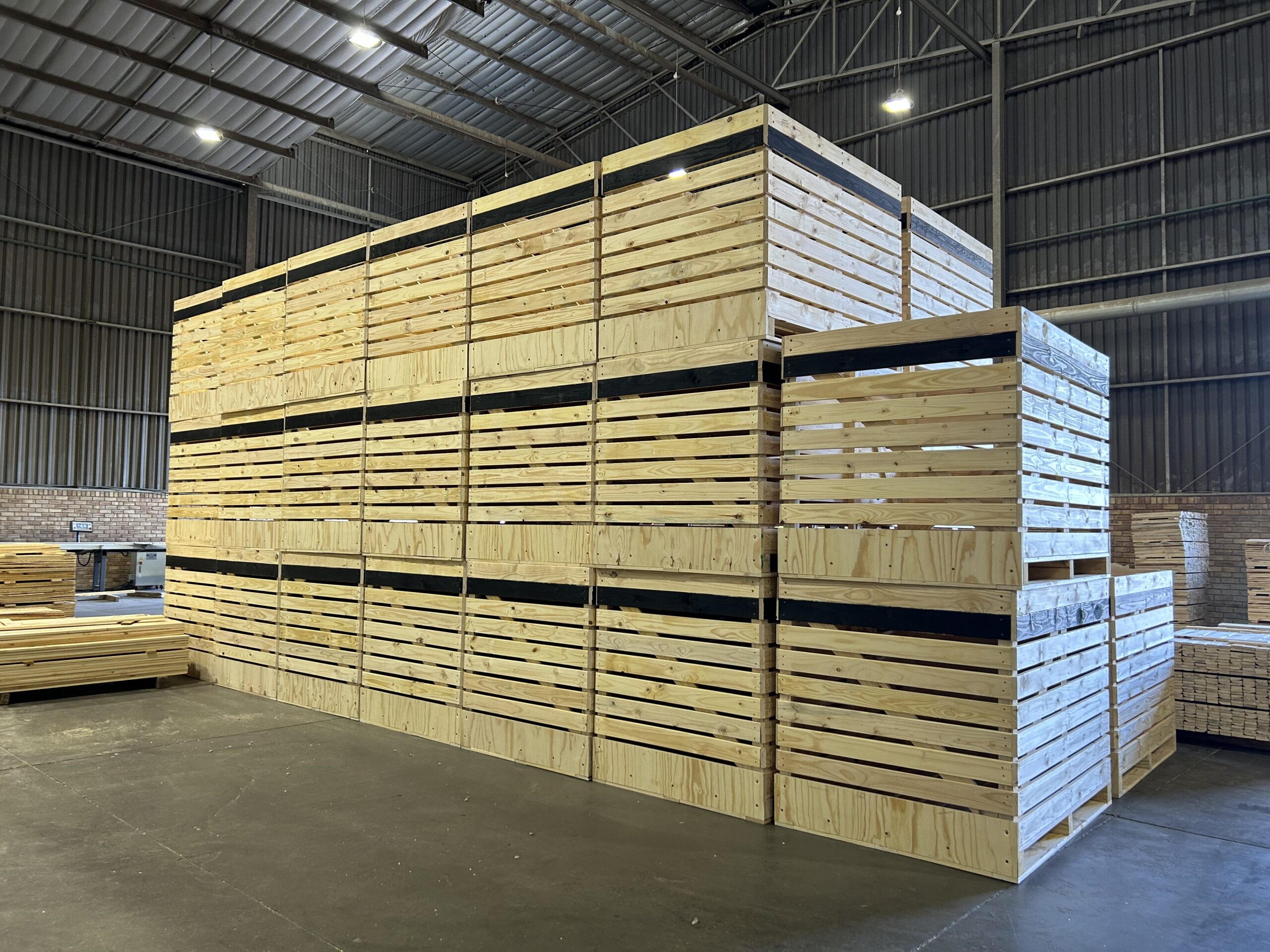
Featured image: AI-generated illustration, not a photograph of Arminel products or facilities.
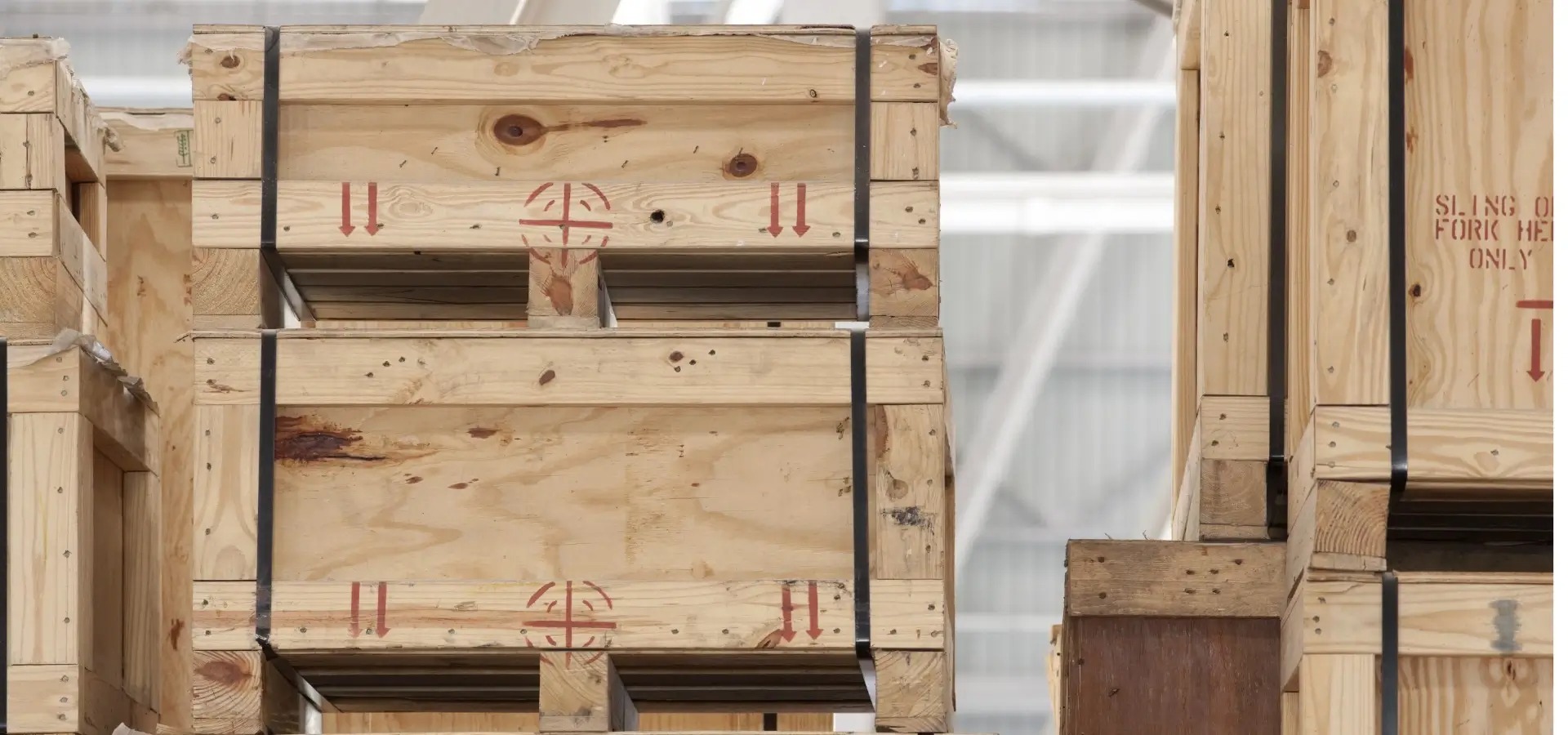
“Box” and “crate” can mean different things to different suppliers. For this comparison, an open wooden crate has gaps between its members, while a timber box is a more enclosed construction. A drawing is more useful than either label when you place an order.
Start with what the packaging needs to do: enclose the component, allow inspection, provide access for packing, or accommodate a particular handling arrangement. The choice depends on the cargo and its journey.
Compare the enclosure
An open structure leaves parts of the contents visible and may suit a brief where access matters. A more enclosed design provides a barrier around the contents. The amount of enclosure alone does not establish impact protection, weather resistance or load capacity.
Ask for a drawing or photographs showing the proposed sides, base and closure. For repeat orders, quote the design reference so a difference in terminology does not result in a different product.
Arminel’s wooden crates and timber boxes pages are starting points for discussing the construction you need.
Plan access for packing and unpacking
Explain whether the item will be lowered into the package or the package assembled around it. Identify the sides that must open, any inspection access, and the tools or lifting equipment available at the destination.
If reuse is required, describe the intended cycle: another dispatch, a return journey or repeated opening during storage. This lets the supplier assess the closure and construction against a defined requirement.
Specify cargo support and restraint separately
Provide the cargo mass, dimensions, support points and contact restrictions. Mark delicate fittings, protrusions and surfaces that need protection.
The responsible packaging specialist should assess how the item will be supported and restrained. A close-fitting enclosure or loose packing material is not, by itself, a securing plan. Agree who is responsible for packing and for securing the package during transport.
For containerised or intermodal shipments, the IMO/ILO/UNECE CTU Code provides voluntary guidance on packing and securing cargo transport units. It is a useful reference for the wider packing operation, not an engineering certification for a particular box or crate.
See also the article on custom crates and dunnage for the relationship between the enclosure and internal cargo protection.
Describe the environmental requirement
“Keep it dry” needs a transport and storage brief: expected exposure, duration and the cargo’s sensitivity to moisture, dust or corrosion.
An enclosed timber box is not necessarily waterproof, airtight or corrosion-proof. Where protection is needed, ask how it will be provided and who will specify and supply it. If liners, cushioning or other protective systems are proposed, confirm their suitability for the cargo and journey, and whether the quote includes them.
Check handling and export requirements
Name the handling equipment and any limits at loading, unloading or storage locations. If packages will be stacked, provide the intended conditions for assessment; a flat lid does not establish stacking capacity.
For export, identify the destination and the proposed timber construction. The IPPC’s ISPM 15 implementation resources cover the plant-health requirements for wood packaging and explain treatment and marking. Confirm which requirements and exemptions apply to the actual materials and shipment with the supplier and relevant plant-health authority. Calling the package a box or crate does not settle that question.
Use a like-for-like quotation brief
| Question | What to specify |
|---|---|
| What is being packed? | Description, measurements and photographs |
| Where is it supported? | Cargo support points and contact restrictions |
| How much does it weigh? | Maximum cargo mass and any existing packaging |
| How enclosed must it be? | Required sides, lid and access points |
| How is it packed and unpacked? | Sequence, equipment and access constraints |
| What environment is expected? | Transport/storage exposure and duration |
| How is it handled? | Equipment and destination requirements |
| Is stacking needed? | Conditions for supplier assessment |
| Is it for export? | Destination and required verification |
| What is the order requirement? | Quantity, required date and delivery location |
Choose against the same requirements
An open crate is not automatically the cheaper option, and a closed box is not automatically the safer choice. Compare the proposed designs against the same cargo, handling and protection brief.
Record what the quote includes, what remains the packer’s responsibility and any details that need confirmation before production. Keep the approved drawing with the order so you can check the design on receipt.
Send the worksheet details to Arminel Industries to discuss a timber box or wooden crate for your component.